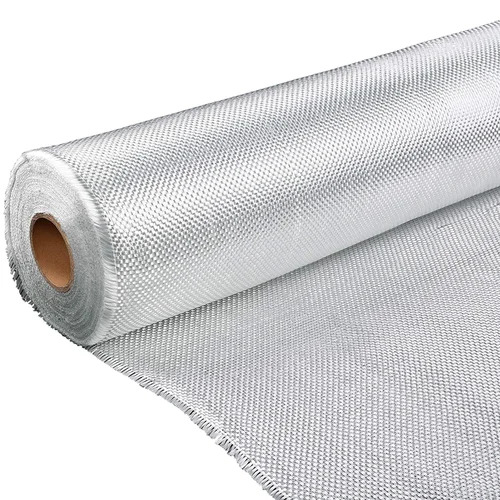
Woven Roving Mat About
| Material | Woven |
| Color | Gray |
| Packaging Type | Roll |
| Coating | Roving |
| Quantity Per Pack | 12 |
| GRADE | A |
| Mat Type | Roving Mat |
| Is It Waterproof | Waterproof |
| Country of Origin | Made in India |
Founded in the year 1992, we, FRP Materials Company are an eminent organization, engaged in trading and wholesaling a comprehensive range of Fiberglass Chopped Strand Mat, Woven Rovings, Surface Mat, ATH Powder, Polyester Resins etc.Superior Reinforcement PerformanceWith high tensile strength, low moisture absorption, and resistance to elevated temperatures (up to 550C), this woven roving mat stands out for structural reinforcement. It efficiently builds rigidity and durability into composite laminates, meeting demands across marine, automotive, construction, and energy industries.
Exceptional Compatibility and ImpregnationSilane surface treatment ensures excellent adhesion and compatibility with epoxy, polyester, and vinyl ester resins. The mat's excellent resin impregnation rate allows for thorough saturation and optimal bonding with the matrix, promoting consistent composite quality.
Customizable, Convenient PackagingAvailable in rolls or sheets with common roll sizes of 50m x 1m and multiple thicknesses, this woven mat is easily tailored for diverse project requirements. Packaging in poly bags or cartons ensures safe and convenient handling during storage and transportation.
FAQ's of Woven Roving Mat:
Q: How is the Woven Roving Mat typically used in composite manufacturing?
A: The Woven Roving Mat serves as reinforcement in composite laminates, providing structural strength and stability. It is commonly utilized in applications such as boat hull construction, automotive parts, GRP panels, and wind energy components, where high tensile strength and resin compatibility are essential.
Q: What benefits does the silane coating offer for this fiberglass mat?
A: Silane coating enhances the mat's adhesion properties, promoting excellent bonding with different resins like epoxy, polyester, and vinyl ester. This results in superior composite integrity, improved mechanical performance, and long-term durability in finished products.
Q: When should the mat be stored and handled to prevent quality loss?
A: For optimal results, the woven roving mat should be stored in a cool, dry area, away from moisture. Proper storage prevents degradation and preserves its mechanical and chemical properties for high-quality composite fabrication.
Q: Where can this product be effectively applied?
A: This woven mat is suited for use in boat building, automotive manufacturing, civil construction, windmill blade reinforcement, and production of GRP panels. Its high thermal tolerance and strength make it versatile across demanding industrial environments.
Q: What is the process for applying resin to the Woven Roving Mat?
A: During lamination, resins like epoxy, polyester, or vinyl ester are impregnated into the mat, which absorbs and bonds well due to its open weave and silane treatment. The mat is then shaped, and cured to form a strong, rigid composite structure.
Q: How does the choice between plain and twill weave patterns affect performance?
A: Plain weave offers stability and uniform strength distribution, while twill weave provides greater drapability and surface smoothness. The selection depends on the required molding complexity and specific strength criteria for the end application.








 Send Inquiry

 Send Inquiry
