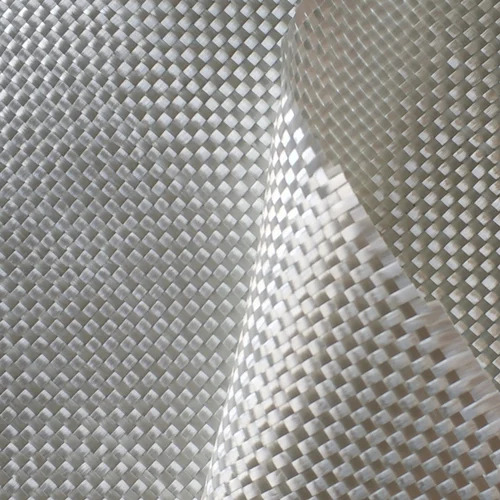
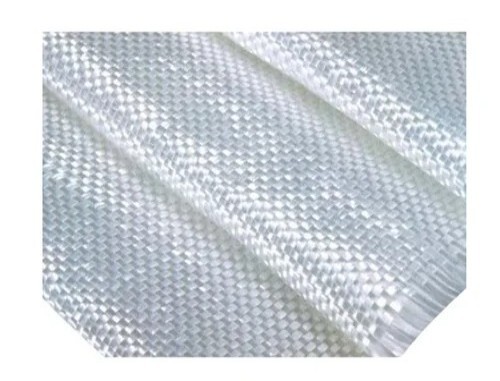
E Glass Woven Roving About
| Color | White |
| Size | 6ft |
| Packaging Type | Roll |
| Resistance | Water Resistance |
| Diameter | 1mm |
| Is It Waterproof | Waterproof |
| Area Weight | 50Kg |
Being one of the largest firms, we are involved in offering a wide range of E Glass Woven Roving to meet the demands of our clientele.
Features: - High strength
- Top quality
- Quality approved design
- Long lasting nature
- Less maintenance
Superior Mechanical StrengthCrafted from E Glass fibers, this woven roving offers outstanding tensile strength ( 3500 N/50mm), making it ideal for applications where mechanical durability is essential. Its reliable structural performance significantly enhances the longevity and resilience of composite materials, even under high-stress conditions.
Versatile Compatibility for Multiple ResinsThis E Glass Woven Roving is designed to work seamlessly with polyester, vinyl ester, and epoxy resins. Its silane surface treatment ensures strong adhesion, facilitating efficient wet-out and reinforcing a variety of composite laminates across industries including construction, marine, and automotive.
Customizable and Easy to HandleAvailable in standard and customizable widths and thicknesses (200-1200 gsm), this product is suitable for diverse process requirements. Provided in either roll or sheet form, it's easy to transport, store, and deploy, thanks to its carefully selected packaging and practical design for professional environments.
FAQ's of E Glass Woven Roving:
Q: How is E Glass Woven Roving typically used in the construction and marine industries?
A: E Glass Woven Roving is primarily utilized as reinforcement in composite laminates, pipe wrapping, boat building, and structural repairs. Its high tensile strength and compatibility with various resins make it ideal for components that demand excellent rigidity and durability.
Q: What benefits does the silane surface treatment offer?
A: The silane surface treatment improves the bond between the glass fibers and resins, resulting in enhanced mechanical properties, superior adhesion, and better resistance to moisture. This ensures more stable and durable finished products in challenging environments.
Q: When should I choose plain weave versus twill weave for my application?
A: Plain weave provides uniform strength and is suitable for flat or low complexity shapes where equal load distribution is important. Twill weave offers greater flexibility and drapability, making it ideal for curved or intricate molds that require the fabric to conform closely to complex shapes.
Q: Where should E Glass Woven Roving be stored to maintain product quality?
A: The woven roving should be stored in a dry, cool environment and away from moisture exposure. This preserves its physical integrity and ensures optimal performance when used in reinforcement applications.
Q: What is the standard process for incorporating this woven roving into composite structures?
A: Typically, the woven roving is cut to the desired size, placed into a mold or onto the workpiece, then impregnated with compatible resins such as polyester, vinyl ester, or epoxy. It is subsequently cured or set, bonding the layers into a rigid composite with improved strength and stability.
Q: How does the product's thermal resistance benefit industrial applications?
A: With a tolerance up to 550C, E Glass Woven Roving excels in high-temperature applications, providing structural reinforcement where thermal stability is critical. This makes it highly valuable in environments with fluctuating temperatures or heat-intensive processes.










 Send Inquiry

 Send Inquiry
